When we talk about equity in sports, it can sometimes feel like a big, overwhelming topic, especially when the focus is on policies or major institutional change. But after interviewing three male soccer players at Nichols College, I was reminded that real progress often starts much smaller. Allyship is not only about formal initiatives or public statements. It shows up in everyday actions, consistent respect, and intentional support.
This perspective closely connects to the mission of the Institute for Women’s Leadership, which focuses on developing inclusive leaders and creating cultures rooted in equity and accountability. Advancing women’s leadership in athletics is not just about changing systems. It is also about shaping daily team environments where respect, advocacy, and shared responsibility are the norms.
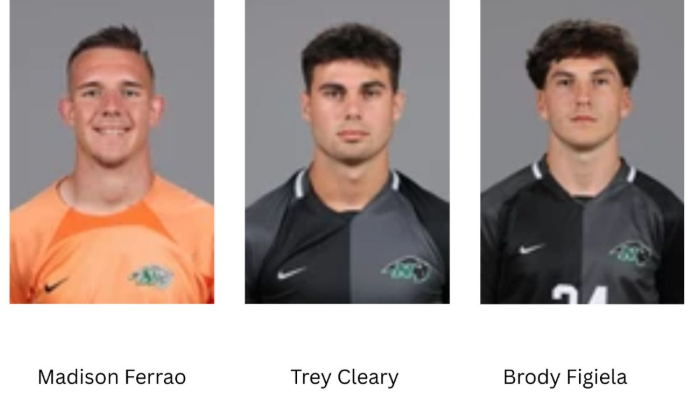
I spoke with Madison Ferrao ’29, Brody Figiela ’29, and Trey Cleary ’28 about what being an ally to women athletes means to them. All three are members of the Men’s Soccer team, and each described how their experience as student athletes has shaped their understanding of leadership and support.
Showing Up and Leading with Respect
For Madison Ferrao, being part of a team means family. Coming from South Africa to play collegiate soccer in the United States, he shared how meaningful it was to immediately feel welcomed and supported by his teammates. That sense of belonging shaped how he approaches others.
To him, allyship is straightforward. It means showing up to women’s games, offering encouragement, and taking their performance seriously. He regularly attends women’s basketball, tennis, and field hockey games, even during his own season. He also watches with intention, looking to learn from the women’s style of play. He kept returning to one simple principle: treat others the way you want to be treated. While that idea may sound basic, it is foundational to build a culture of mutual respect.
Building Trust Across Teams
Brody Figiela connected allyship directly to team culture and trust. He described being part of a team as having a built-in support system that extends beyond the field. As a former high school captain, he made it a point to bring the boys’ team to girls’ games when their schedules allow. The girls’ team returned that support, creating a strong and respectful bond between programs.
For Brody, allyship also involves a willingness to learn and self-reflect. He emphasized that every athlete brings different experiences and perspectives, and strong teams work toward balance and understanding. His mindset of striving to be one percent better each day applies not only to athletic performance, but also to communication, accountability, and respect. In his view, supporting women strengthens leadership because it builds collaboration and trust across the athletic community.
Consistency Over Recognition
Trey Cleary focused on the importance of consistency. He explained that being part of a team means recognizing that everyone’s effort matters, not just captains or starters. That same mindset applies to allyship.
For Trey, being an ally appears in everyday moments. It means listening before reacting, addressing disrespect when it occurs, attending women’s games, amplifying their achievements, and advocating for equal recognition and resources. He stressed that allyship should never be performative. It must be active and ongoing. One insight that stood out was his belief that support is not about being a hero. It is about showing up consistently. That shift in perspective, he shared, has made him a stronger teammate overall.
Strengthening Leadership Through Allyship
Across all three interviews, one theme remained clear. Allyship is not complicated. It is built through presence, respect, and daily habits. It involves choosing to show up, choosing to speak up, and choosing to value women’s achievements equally.
Supporting women in athletics does not diminish men’s success. Instead, it strengthens the entire athletic culture. It creates healthier team environments, encourages open communication, and broadens perspectives. Most importantly, it reinforces that leadership is not just about personal performance. It is about who you uplift along the way.
Through these conversations, it became clear that male athletes play a meaningful role in shaping sports culture. Change does not happen only at the administrative level. It happens in the stands, in locker rooms, and in everyday interactions between teammates. When men commit to being consistent and genuine allies, they elevate the standard of leadership across campus.
Strong teams are built on trust. Trust grows when individuals feel seen, supported, and valued. That is what real allyship in sports looks like, and it is a powerful step forward in advancing the mission of the Institute for Women’s Leadership.